
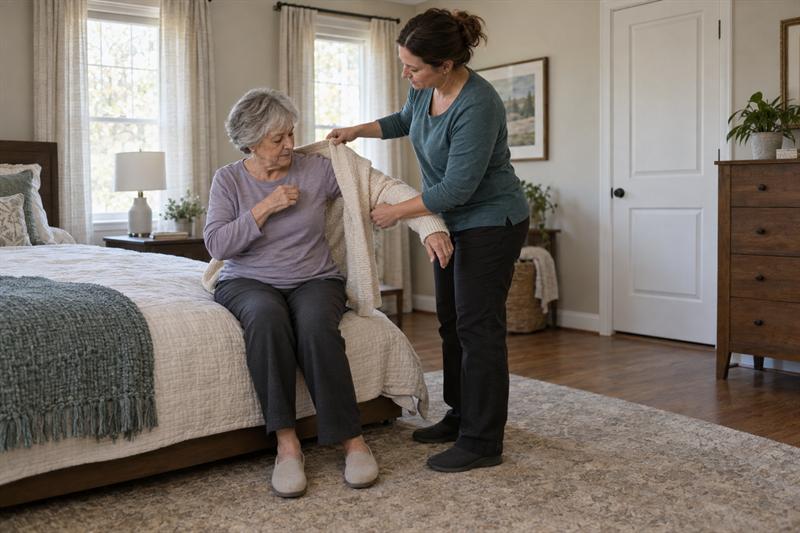
Home Care vs Home Health at a Glance
Families usually run into this question when something has changed at home, but the next step is still unclear. A parent may be missing meals, struggling in the shower, forgetting appointments, or coming home after a hospital stay, and suddenly the terms home care and home health start sounding interchangeable.
They are not interchangeable. Home health focuses on medical treatment at home. Home care focuses on daily living support at home. At Honeybee Homecare, this is one of the most common points of confusion families face early in the decision process, and it can delay the support that actually fits the situation.
- Home health: Medical care at home from licensed professionals
- Home care: Non-medical help with daily routines, safety, and independence
The Simplest Way to Understand the Difference
If the person needs treatment, therapy, wound care, or skilled monitoring, that is home health. If the person needs help getting dressed, preparing meals, getting to appointments, keeping up with routines, or staying safe at home, that is home care.
This matters because the wrong category can leave the real problem in place. A family may arrange a medical visit and still find that the person does not have enough day-to-day help.
What Home Health Includes
Home health includes medical services delivered in the home by licensed professionals. It is usually tied to a medical need, recovery period, or treatment plan rather than ongoing help with daily routines.
Families sometimes assume all help at home falls into one category. It does not. Home health addresses medical needs. It does not replace regular assistance with meals, bathing, transportation, or household routines.
Medical Services Commonly Provided Through Home Health
- Skilled nursing
- Physical therapy
- Occupational therapy
- Wound care
- Pain-related symptom support or treatment-related monitoring
A common pattern is that families hear “care at home” after a hospitalization and assume someone will be there throughout the day. That is where confusion starts. Medical visits may be important, but they do not cover the full routine of daily living.
What Home Care Includes
Home care includes non-medical support that helps an older adult stay safer, more comfortable, and more independent at home. This support usually centers on ADLs, which are activities of daily living, and iADLs, which are instrumental activities of daily living.
At Honeybee Homecare, this is where the difference usually becomes clear. The issue is often not treatment. The issue is that a loved one is having a harder time getting through the day reliably without help. When that support is missing, routines may break down first, and safety concerns can follow.
For a more detailed breakdown of service types, families can explore Types of In-Home Care Services Explained.
Examples of Non-Medical Home Care Services
- Companionship
- ADL assistance such as bathing, dressing, grooming, toileting, and transfers
- iADL assistance such as meal preparation, errands, light household support, and routine help
- Transportation to appointments
- Pet care when daily routines become harder to manage alone
This kind of support is often needed before families expect it. Someone may still be living at home, speaking clearly, and wanting independence, but the daily structure that keeps life stable may already be slipping.
Side-by-Side Comparison: Home Care vs Home Health
The clearest way to compare home care vs home health is to look at who provides the service, what they do, and what problem they are there to solve. Once families separate those three things, the decision usually becomes easier.
Home Care vs Home Health by Provider, Tasks, and Goals
- Provider: Home health is provided by licensed medical professionals. Home care is provided by caregivers who assist with non-medical daily needs.
- Tasks: Home health handles medical services such as nursing or therapy. Home care handles support such as bathing, dressing, meals, companionship, transportation, and routines.
- Goal: Home health supports treatment and recovery. Home care supports safe, consistent living at home.
- Timing: Home health is often tied to a medical need or recovery period. Home care is often ongoing because daily living needs do not disappear after a short visit.
Medication help is a good example of where families get tripped up. Medication administration is a medical task. Medication reminders are part of daily support. That difference changes what kind of help is actually needed.
When a Family May Need Home Care Instead of Home Health
A family usually needs home care when the main problem is not treatment, but daily function. The person is still living at home, but the basic structure of the day is becoming harder to manage safely.
This is something Honeybee Homecare often hears from families when changes happen gradually. There may be no single emergency, but bathing gets skipped, the refrigerator stays full because meals are not being made, appointments are missed, and household tasks start piling up. Left unaddressed, those changes can lead to more stress for the family and a rushed decision later.
If you are still sorting out the level of help needed, How to Assess Your Parent’s Senior Care Needs can help you organize what you are seeing.
Signs the Need Is More About Daily Living Support
- Difficulty bathing or dressing safely
- Missed meals or poor nutrition
- Trouble getting to appointments
- Household tasks falling behind
- Isolation or reduced engagement
- Family coverage becoming inconsistent or unsustainable
If you are seeing these signs, the issue is often not a lack of medical treatment. It is a lack of consistent support through the day. In that situation, home care is usually the more practical fit.
Families who are unsure where the line is can also read How to Tell If Your Parent Needs More Than Just a Home Health Aide.
If this sounds familiar, it may be time to act.
- A loved one is safe during a short visit, but struggles the rest of the day
- Meals, hygiene, or mobility are becoming inconsistent
- Transportation problems are causing missed appointments or skipped errands
- Family members are filling gaps in an unsustainable way
When these signs are already present, waiting can lead to more safety issues, more stress, and fewer good options.
When a Family May Need Home Health Instead of Home Care
A family may need home health when the person requires skilled medical care at home. This usually follows a medical event, supports recovery, or addresses treatment needs that require licensed oversight.
The important point is that non-medical caregivers do not replace skilled medical services. If the need is clinical, the solution has to match that need. Choosing only daily support in that situation may leave the medical issue unaddressed.
Signs Skilled Medical Care May Be Part of the Plan
- Need for wound care
- Need for therapy at home
- Recent medical event or recovery period
- Ongoing clinical monitoring recommended by a provider
If you are seeing these signs, the issue usually involves treatment, recovery, or monitoring. That points to home health. In some cases, home health handles the medical side while home care covers what still has to happen between visits.
Can Someone Receive Both Home Care and Home Health?
Yes. Many families end up needing both because the medical issue and the daily living issue are separate problems.
A person may receive therapy or nursing support at home and still need help with bathing, dressing, meals, transportation, and routine supervision. This is a common pattern after a hospital stay. The medical need gets identified first, but the daily support need often becomes obvious once the person is back home and trying to move through a normal day again.
How to Choose the Right Type of Support
The most useful question is not “What service sounds familiar?” The real question is “What kind of help is missing during the day?”
If the missing help is clinical, treatment-based, or tied to recovery, start with home health. If the missing help involves routine, safety, mobility, meals, transportation, or personal care, home care is usually the more practical choice. When families get this backwards, they can lose time and end up solving only part of the problem.
Questions to Ask Before Choosing Home Care or Home Health
- Is the main need medical treatment or daily support?
- Does the person need help every day or only during clinical visits?
- Are bathing, dressing, meals, mobility, or transportation becoming difficult?
- Has a provider recommended skilled care at home?
- Would layered support help the person remain safer and more independent?
Consistency also matters. If needs are changing from week to week, the support plan may need to change with them. Families thinking through frequency and routine may also find How Often Should a Caregiver Visit? useful.
Where Non-Medical Home Care May Fit for Families in Roswell
For families in Roswell, non-medical home care may fit when a loved one wants to remain at home but daily life is no longer running smoothly without help. That can look less like a medical crisis and more like a steady build of small problems that are no longer small.
At Honeybee Homecare, support plans are built around the person’s actual routine. That may include companionship, ADL assistance, iADL help, transportation, or pet care. The goal is not to make care feel bigger than it needs to be. The goal is to place support where the day is already starting to break down.
Families who want a broader look at how non-medical support works can review the In-Home Senior Care Service Guide.
Key Takeaways
- Home health is medical care provided at home by licensed professionals.
- Home care is non-medical support with daily living, safety, and routine.
- The two services are often confused because both happen at home.
- Families usually need home care when the problem is daily function, not treatment.
- Some people need both, especially after a hospital stay or during recovery.
- Choosing the wrong type of help can delay the support that actually solves the problem.
Conclusion
The real problem is not the wording. The real problem is that families can lose time when they treat home care and home health as the same thing. When daily support needs are mistaken for a medical care issue, routines may keep slipping, safety concerns can grow, and family members may end up carrying more than they can sustain.
If the issue at home involves bathing, dressing, meals, transportation, companionship, or keeping daily life on track, Honeybee Homecare may be a practical next step. Honeybee Homecare helps families in Roswell put support in place before small disruptions turn into bigger problems, making it easier to protect both independence and stability at home.
FAQ
What is the main difference between home care and home health?
Home health is medical care provided at home by licensed professionals. Home care is non-medical help with everyday tasks like bathing, dressing, meals, transportation, companionship, and routine support.
The most important distinction is the type of need. If the issue is treatment or recovery, that points to home health. If the issue is getting through the day safely and consistently, that points to home care.
Can a person receive home care and home health at the same time?
Yes, and this is more common than many families expect. The two services do different jobs, so they can work side by side.
For example, a person may have therapy visits for recovery but still need help every morning with bathing, dressing, meals, and mobility. The medical visits address one part of the problem. Home care addresses what happens during the rest of the day.
Does home care include help with bathing, dressing, and meals?
Yes. Those are standard examples of non-medical home care because they are part of daily living support rather than treatment.
Bathing and dressing fall under ADL assistance. Meals usually fall under iADL support. This matters because families sometimes assume these struggles mean a person needs medical care, when the actual issue is that daily tasks are no longer manageable without help.
When should a family look into home health instead of non-medical home care?
A family should look into home health when the person needs skilled medical services at home, such as therapy, wound care, or clinical monitoring connected to a recovery or treatment plan.
The decision changes based on the problem that needs to be solved. If the concern is medical, treatment-based, or tied to recovery, home health fits. If the concern is hygiene, meals, mobility, transportation, or routine support, home care is usually the better match.
Is transportation considered home care or home health?
Transportation is generally part of home care because it supports daily living rather than medical treatment. It helps someone maintain appointments, errands, and routine responsibilities that become harder to manage alone.
This is also one of the earlier signs families notice. A person may still be living independently in some ways, but repeated trouble getting where they need to go usually means broader support needs are starting to show.
How do families know if a parent needs more support at home?
They usually see it in repeated breakdowns, not one isolated moment. Meals get skipped, laundry and errands pile up, bathing becomes harder, appointments are missed, or the person becomes more isolated and less engaged.
This can get worse when families explain away each issue as a one-time problem. When the same daily tasks keep slipping, the pattern matters more than any single incident. That is usually the point where outside support becomes worth exploring.