
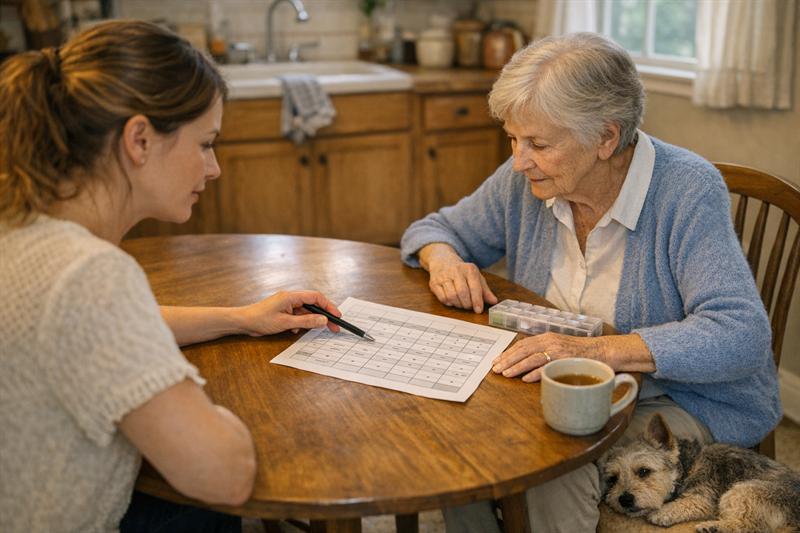
Quick Answer: The caregiver matching process works best when it considers more than open schedule slots. Your parent’s support needs, routine, communication style, home environment, and comfort with receiving help all affect whether in-home support becomes part of daily life or a source of stress.
When families focus only on getting help in place quickly, they can miss the details that shape a parent’s experience. Honeybee Homecare creates personalized in-home care plans with clients, helping families consider daily routines alongside the support their parent needs.
Key Takeaways
- A caregiver match involves practical fit, routine fit, and relationship fit.
- Details about schedules, support needs, pets, transportation, and communication can prevent avoidable problems during early visits.
- Caregiver consistency matters, but schedules and support needs can change, making communication and review important.
- If the first arrangement does not feel right, specific feedback gives the agency a clearer basis for adjusting the plan.
Choosing Home Care Is Also Choosing a Relationship
Home care is not only about meal preparation, errands, companionship, transportation, or personal assistance. It also means welcoming someone into a parent’s home, routines, and private space.
A caregiver may be available at the right time and able to assist with the right tasks, yet still feel like the wrong fit if their approach does not suit the parent. Some older adults enjoy conversation and encouragement during a visit. Others prefer calm, respectful help with minimal disruption. Problems can begin when matching is treated as an administrative step instead of a care decision.
Families may know which tasks need attention without knowing how their parent wants support to be offered. That distinction matters. Task fit addresses what needs to be done, while relationship fit affects whether support feels comfortable enough to become part of the parent’s routine.
What Is the Caregiver Matching Process?
The caregiver matching process is how a home care agency connects a parent’s requested support, daily routine, schedule, household needs, and personal preferences with a caregiver who can provide appropriate nonmedical assistance. A thoughtful process involves more than assigning the first available caregiver.
- Type and level of requested assistance
- Preferred days, times, and visit length
- Transportation, pet care, and household needs
- Communication preferences and family update needs
- Caregiver availability and practical fit
Companionship, instrumental activities of daily living (iADL) assistance, activities of daily living (ADL) assistance, transportation, and pet care are nonmedical in-home support services. They do not replace clinical assessment, skilled nursing, emergency care, or other physician-directed services. Understanding that difference helps families choose support that aligns with their parent’s needs.
What Information Helps Create a Better Caregiver Match?
A stronger caregiver match starts with specific information. Families benefit from describing not only what their parent needs help with, but also how their parent prefers daily life to work.
- Care needs: What assistance is needed, and what support feels welcome?
- Schedule: When does help need to happen, and which routines should remain consistent?
- Communication style: Does the parent prefer conversation, quiet, reminders, or more personal space?
- Home environment: Are there pets, stairs, driving needs, household rules, or access details to consider?
Daily Living Needs and Level of Assistance
The level of daily support shapes the practical side of the match. A parent who needs companionship, errands, meal support, or transportation has different expectations from someone who also needs hands-on assistance with personal routines.
Families should be clear about which tasks are needed, which require extra sensitivity, and where the parent wants to maintain control. For example, a parent may welcome rides to appointments and help with groceries but prefer privacy around grooming or dressing. That preference affects how support should be planned from the beginning.
Families sometimes describe a parent as “doing fine” because the parent can still complete some tasks. At the same time, daily routines may be becoming more difficult because of missed meals, challenging errands, or fatigue. Defining the support needed before the situation becomes urgent can lead to a clearer plan.
Schedule, Visit Length, and Consistency Needs
Caregiver matching depends heavily on when support is needed. Preferred visit times, weekly routines, appointment schedules, transportation needs, and visit length all affect practical fit.
Consistency matters because familiar routines can make it easier for a parent to know what to expect. Still, caregiver schedules can change because of time off, illness, availability, or evolving support needs. What matters is having a clear plan for communication when changes occur.
If your parent becomes upset when visits happen at inconsistent times, the schedule may need more attention. A care arrangement is easier to manage when the routine is detailed enough to guide the match from the start.
Personality, Communication Style, and Interests
Relationship fit is not just about finding someone with the same hobbies. It includes whether the caregiver’s approach fits the parent’s communication style, privacy preferences, social energy, and comfort with family involvement.
One parent may enjoy talking through breakfast, sharing stories, and planning an outing. Another may value quiet assistance, a predictable routine, and fewer questions. Both preferences are valid. A mismatch can happen when a caregiver is expected to guess which approach feels respectful.
Parents should be included in these conversations whenever possible. Their preferences are part of the information needed to create a workable arrangement. Families can also review practical ways of building trust between seniors and caregivers as the relationship develops.
Home Environment and Practical Considerations
The home itself affects how care feels and how smoothly visits run. Details that seem small during an initial conversation can become recurring concerns if they are not shared early.
- Pets that need feeding, walking, or a calm introduction
- Stairs, mobility equipment, parking, and home-entry details
- Transportation needs and driving expectations
- Household routines, preferred rooms, and privacy boundaries
- Smoke, scent, or other environmental sensitivities
Transportation or pet care may be added after services begin, even though both affect scheduling and caregiver fit. When those needs are discussed upfront, the care plan can better reflect what daily life requires rather than requiring repeated adjustments later.
How the Caregiver Matching Process Works Step by Step
A thorough matching process generally follows a clear sequence: understand the parent’s needs, build the care plan, confirm practical fit, consider comfort, and review how the arrangement is working. Specific processes vary by provider, but families should expect these factors to be discussed.
- Start with a care consultation.
- Build a care plan around the parent’s routine.
- Identify caregivers who fit the practical requirements.
- Consider comfort, communication, and household fit.
- Begin care, listen closely, and adjust when needed.
Step 1: Start With a Care Consultation
A care consultation gives the family a chance to explain what is happening now, what support is needed, and what the parent wants daily life to look like at home. It should cover routines, schedules, transportation, household details, pets, communication expectations, and the parent’s perspective.
Families should also learn how the agency handles caregiver matching, schedule changes, and feedback. The most useful questions to ask during a home care consultation show how an agency turns personal information into a practical care arrangement.
Step 2: Build a Care Plan Around the Parent’s Routine
A care plan should organize requested support around the parent’s actual routine. That means identifying when help is needed, which tasks matter most, and which parts of the day the parent wants to keep familiar and independent.
Honeybee Homecare creates personalized in-home care plans with clients because a task list alone does not explain the rhythm of a person’s day. A plan may include companionship in the afternoon, transportation to appointments, iADL support with meals and errands, hands-on assistance with personal routines, or pet care. The goal is to show how these services fit together in daily life.
Step 3: Identify Caregivers Who Fit the Practical Requirements
Practical fit comes first. The caregiver needs to be able to provide the requested nonmedical services within the needed schedule and service area.
- The type of assistance requested
- Visit timing and expected duration
- Transportation or driving needs
- Household factors, including pets and stairs
- Caregiver availability that fits the plan
Personality alone cannot solve a schedule mismatch or a gap in the care plan. A warm connection matters, but the arrangement also needs to work in practical terms.
Step 4: Consider Comfort, Communication, and Household Fit
Once the practical requirements are clear, comfort becomes an important part of the decision. A good fit may mean a caregiver who understands that your parent prefers quiet mornings, enjoys conversation during errands, wants extra privacy around personal assistance, or needs adult children updated in a specific way.
These details are not extras. They can turn help into a routine that feels respectful. When they are overlooked, a parent may pull back, decline support, or become frustrated with visits that meet the task list but do not fit their life.
Step 5: Begin Care, Listen Closely, and Adjust When Needed
The first visits can show whether the schedule, level of support, and communication approach are working in real life. Families should pay attention to how the parent responds before and after visits, whether routine tasks are handled as expected, and whether communication remains clear.
Early feedback can keep small concerns from becoming established patterns. If a parent is quieter than usual, resists a particular routine, or repeatedly says a visit feels rushed, the arrangement may need review. Immediate health or safety concerns call for the appropriate emergency or clinical support.
Why Caregiver Matching Matters for an Aging Parent’s Comfort
Caregiver matching matters because support generally works better when a parent can accept it as part of everyday life. The right arrangement does not remove every adjustment, but it can give the parent clearer expectations and reduce unnecessary disruption.
- It supports familiar routines. Predictable support can make daily life easier to follow.
- It respects privacy and dignity. The parent has more say in how help is offered.
- It improves communication. Family members can better understand how updates, concerns, and changes will be handled.
- It reduces friction early. Clear expectations can prevent repeated conflict over timing, tasks, and boundaries.
If matching is handled only around availability, the family may need to revise expectations after care begins. That can create stress for the parent, caregiver, and adult children coordinating care. Identifying the details that shape comfort before the first visit gives everyone a clearer starting point.
What Families Can Do to Help the Match Go Smoothly
Families can support the caregiver matching process by sharing the details that affect everyday care. Unclear descriptions can lead to unclear plans, which can create frustration once visits begin.
- Write down your parent’s usual routine and preferred visit times.
- Describe what help feels welcome and what feels too intrusive.
- Be specific about transportation, mobility, pets, household rules, and home access.
- Explain how your parent prefers to communicate and how family members want updates.
- Include the parent in the conversation whenever possible.
- Raise concerns early, using specific examples rather than general dissatisfaction.
If you are seeing repeated resistance to visits, confusion about what the caregiver is there to do, or tension between family expectations and your parent’s preferences, the arrangement may need more than reassurance. A clearer care plan and a more detailed matching conversation can help identify what needs to change.
What If the First Caregiver Match Does Not Feel Right?
If the first caregiver match does not feel right, identify what is not working and address it early. The issue is not necessarily that someone has failed. The schedule, communication style, household routine, or level of assistance may not match the parent’s needs closely enough.
- Your parent repeatedly seems uncomfortable before or after visits.
- Visits feel rushed, disruptive, or poorly timed.
- The parent wants more privacy, less conversation, or a different approach to assistance.
- Transportation, pet care, or household needs were not included in the original plan.
These signs are a reason to review the care plan and caregiver arrangement. Waiting can make the concern harder to address because the parent may begin to associate home care with discomfort. Specific feedback gives the agency a clearer basis for adjustment.
Caregiver Matching Questions to Ask During a Consultation
- How do you learn about my parent’s daily routine and preferences?
- What practical factors do you consider when assigning a caregiver?
- How do you support caregiver consistency when possible?
- How should family members communicate updates or concerns?
- What happens if my parent’s needs change or the first match is not comfortable?
These questions move the conversation beyond broad promises about care. They can show whether the agency has a clear process for matching support to the person, the home, and the family’s routine.
Honeybee Homecare’s Approach to Caregiver Matching
Honeybee Homecare creates personalized in-home care plans with clients. Those plans can consider the support needed, including companionship, iADL assistance, ADL assistance, transportation, and pet care, along with the routines and preferences that affect comfort.
Caregiver concerns can begin with details that were never discussed: a visit time that interrupts a routine, a parent who wants more privacy, a pet that changes how the home functions, or family members who are unsure how updates will be handled. Addressing these details early creates a clearer path for the parent, caregiver, and family.
FAQ: Caregiver Matching Process Questions Families Often Ask
How does the caregiver matching process work?
The caregiver matching process begins with the parent’s requested support, routine, schedule, household needs, and communication preferences. The agency then considers practical fit, such as transportation needs and visit timing, along with relationship factors such as whether the parent prefers conversation or quiet assistance. A caregiver assignment should align with both the care plan and the person receiving care.
What should I tell a home care agency before they match a caregiver with my parent?
Share the parent’s daily routine, preferred schedule, requested assistance, transportation needs, pet care needs, home setup, and communication preferences. Explain what help feels welcome and what feels intrusive. For example, a parent who accepts help with groceries but wants privacy during personal routines needs a different approach from someone seeking hands-on support throughout the day.
Can my parent meet the caregiver before services begin?
Introduction options depend on the agency’s process, schedule, and caregiver availability. It is helpful to understand how the parent will be introduced to the caregiver and what the first visits will involve. A clear introduction can reduce the feeling that a stranger is suddenly taking over the home.
What if my parent does not feel comfortable with the caregiver?
Discomfort can point to a mismatch in communication, timing, routines, or expectations. A parent may want less conversation, a different visit time, more privacy, or a clearer explanation before assistance begins. Those details help distinguish a routine-fit concern from a broader support concern. Immediate health or safety issues call for appropriate urgent or clinical support rather than routine caregiver feedback.
Is caregiver matching the same as choosing home health care?
No. Caregiver matching for nonmedical in-home support focuses on daily living assistance, companionship, transportation, household routines, and personal care within the provider’s scope. Home health care generally involves skilled clinical services and serves a different purpose. A parent may need help managing daily life at home without needing skilled medical care.
How often should a caregiver match be reviewed?
A caregiver match should be reviewed when the parent’s routine, comfort level, schedule, or support needs change. There is no single timeline because review needs depend on what is happening at home. Repeated frustration, missed expectations, new transportation needs, or changes in personal assistance are signs that the original plan may need attention.
Finding Support That Fits the Person, Not Just the Task List
The goal is not simply finding someone to help. It is finding support that fits your parent’s needs, routine, privacy, home environment, and comfort with receiving care. When those details are not addressed, small frustrations can grow into resistance, family stress, and a care arrangement that does not feel settled.
Honeybee Homecare provides personalized in-home care plans for families who need companionship, iADL assistance, ADL assistance, transportation, or pet care. Start by defining the routine your parent wants to keep and the help that is becoming harder to manage. That information can guide a caregiver match that supports daily life with greater clarity and respect.
For additional preparation, review what families should expect during the first week of home care so the transition begins with clear expectations.