
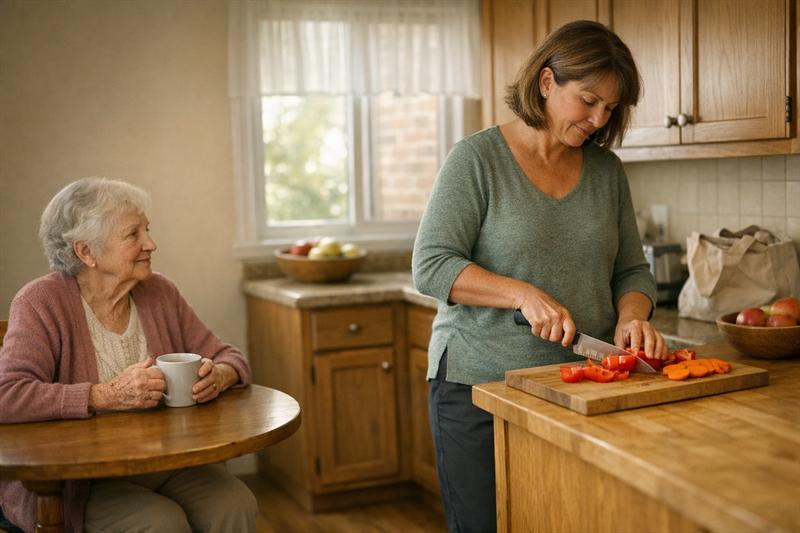
Families usually ask this question after something changes. A parent may skip meals, stop driving, struggle in the shower, let laundry pile up, or seem less steady on their feet. The challenge is not simply finding “help.” It is identifying which daily tasks need support and which concerns need clinical care instead.
At Honeybee Homecare, care planning begins with the details of the day: what has become harder, when help is needed, how much physical assistance is involved, and which routines matter most at home. This creates a clearer plan than choosing a broad service label without defining the actual need.
What Does a Caregiver Do in the Home?
An in-home caregiver supports the everyday activities that help a person continue living at home with greater comfort and consistency. Depending on the care plan, support may include companionship, meal preparation, light housekeeping, errands, transportation, personal care, mobility assistance, and help maintaining familiar routines.
Caregiver responsibilities differ from one household to another. One person may need companionship and transportation a few hours each week. Another may need hands-on help with bathing, dressing, toileting, or moving safely through the home. The right plan starts with the tasks that are becoming difficult.
- Companionship and conversation
- Meal preparation and household routines
- Errands, shopping, and transportation
- Light housekeeping and laundry
- Pet care support
- Bathing, dressing, grooming, and toileting assistance
- Walking, mobility, and eating support
For a fuller look at available levels of support, explore these types of in-home care services.
Common Caregiver Responsibilities
The clearest way to understand caregiving is to look at what happens in an ordinary day. Broad terms such as “senior care” do not tell a family whether someone needs help getting dressed, getting to an appointment, preparing meals, or keeping up with household responsibilities.
Companionship and Daily Routine Support
Companionship provides regular connection during parts of the day that may feel isolating or difficult alone. It may include conversation, shared hobbies, reading, games, walks when appropriate, meals together, and accompaniment to planned outings.
Families may notice social withdrawal before a clear physical change. A loved one may stop attending activities, avoid going out, or spend long stretches without meaningful interaction. As this continues, daily routines can become less consistent. Regular companionship can add structure and help the person stay connected to activities they enjoy.
iADL Assistance: Meals, Housekeeping, Errands, and Organization
Instrumental activities of daily living, often called iADLs, are the tasks that keep a household and daily schedule running. They are not personal-care tasks, but they can become a serious concern when they are no longer completed consistently.
- Planning and preparing meals
- Grocery shopping and errands
- Light housekeeping
- Laundry and linen changes
- Routine organization
- Appointment reminders
- Support with everyday household tasks
Light housekeeping means support for the client’s normal living environment. It does not mean deep cleaning, major home projects, or taking over the entire household. Families may assume a loved one is managing because the home looks reasonably organized during a short visit. A closer look may reveal missed meals, unopened mail, unwashed laundry, or errands postponed for weeks.
Transportation and Appointment Support
Transportation support can include rides to appointments, grocery stores, social outings, errands, and other planned activities. The support is often more involved than the drive itself. A caregiver may help a client get ready, gather needed items, provide company, and assist with entering or exiting a vehicle when appropriate.
Transportation becomes important when driving is no longer comfortable or safe, but the person still wants to stay connected to appointments, errands, and community life. Without reliable transportation, appointments can be delayed and grocery trips can become less frequent. The practical question is which outings matter most and what level of mobility support is needed for each one.
Pet Care Support as Part of the Home Routine
For many older adults, a pet is part of the household and part of the daily rhythm. Basic pet care support may include feeding a pet, refreshing water, helping with supply errands, or assisting with simple routines that have become difficult because of mobility limitations.
Some clients are more open to support when it also helps maintain the routine they share with a pet. Pet care support is household assistance, not veterinary care. If a pet has specialized medical, behavioral, or mobility needs, those needs should be addressed separately from the client’s caregiving plan.
ADL Assistance: Personal Care and Mobility Support
Activities of daily living, or ADLs, are personal tasks people usually handle privately. When these tasks become difficult, the issue goes beyond convenience. It can affect comfort, hygiene, confidence, and safety at home.
- Bathing or showering support
- Grooming and dressing
- Toileting and continence care
- Eating assistance
- Walking and mobility support
- Transfers when appropriate to the care plan and safety needs
ADL assistance may range from reminders and standby support to direct hands-on help. For example, a person may choose their clothing and dress independently but need help with socks, shoes, or balance. Another person may need someone nearby in the shower because stepping over the tub edge has become unsteady.
Mobility and transfer needs require careful planning. The amount of assistance, the person’s strength, any mobility equipment, and the home setup all matter. Repeated near-falls or difficulty standing up may mean the care plan and home-safety approach should be reviewed.
Hands-Off vs. Hands-On Assistance: What Is the Difference?
The difference between hands-off and hands-on assistance helps families choose the right level of support. It also prevents a common misunderstanding: needing care does not mean a person has lost all independence. Many people need help with a few specific tasks, not every part of the day.
Hands-Off Assistance for iADLs and Routine Support
Hands-off assistance generally focuses on tasks that do not require direct personal-care help. This may include meals, errands, laundry, companionship, transportation, light housekeeping, household organization, and pet-related routines.
A person who is physically independent but has stopped driving is a useful example. They may not need help bathing or dressing. They may need support with groceries, appointments, meals, and regular social contact so those responsibilities do not fall behind.
Hands-On Assistance for ADLs
Hands-on assistance involves direct help with personal daily activities. This can include bathing, dressing, grooming, toileting, eating, and mobility support.
The level of help should match the person’s actual ability. Someone who needs hands-on support with bathing may still make their own breakfast, enjoy independent hobbies, and manage many decisions on their own. A care plan should preserve what the person can still do while adding help where the routine is breaking down.
Why the Difference Matters When Arranging Care
This distinction affects visit length, scheduling, caregiver matching, and safety expectations. It also helps a family determine whether the need is primarily household support, personal care, or a combination of both.
- If someone is independent with personal care but no longer drives, transportation and iADL support are often a practical starting point.
- If someone can prepare meals but struggles to bathe and dress safely, hands-on ADL assistance may be the clearer need.
- If someone is physically capable but increasingly isolated and behind on daily tasks, companionship and household support may help restore structure before routines decline further.
Some families wait for a major event, such as a fall or hospital stay, before arranging help. In many situations, the earlier signs are smaller changes in routine. Addressing those changes task by task allows support to be built around current needs rather than around a crisis.
What Can a Caregiver Not Do?
Caregivers provide important daily support, but non-medical caregiving has boundaries. Understanding those boundaries helps clients, families, and caregivers avoid expecting routine home care to solve a clinical problem.
Caregivers Do Not Replace Doctors, Nurses, or Therapists
A non-medical caregiver generally does not diagnose medical conditions, prescribe treatment, perform skilled nursing procedures, or make medical decisions. Their role is to support daily living, observe meaningful changes, and communicate concerns through the established care plan.
Caregiving and clinical care can work alongside each other, but they serve different purposes. A caregiver may notice that a client is not eating, appears weaker than usual, or is having more difficulty moving around the home. Those observations may mean the care plan or medical support should be reviewed. The caregiver is not there to determine a diagnosis or treatment.
Medication Reminders vs. Medication Administration
Medication reminders and medication administration are not the same task. A reminder may involve prompting a client that it is time to take medication, helping maintain an established routine, or noting missed doses according to the care plan.
Medication administration involves handling or giving medication and may require specific qualifications, policies, training, delegation, or licensed oversight. This is an area of home care that families may misunderstand. Because medication is part of a daily routine, it is easy to assume every caregiver can manage it in the same way. The exact task matters, along with the care arrangement and applicable requirements.
Medical Procedures and Skilled Care Tasks
Tasks involving clinical assessment, treatment, wound care, injections, IV care, or other skilled procedures generally require licensed healthcare professionals. These needs should not be added casually to a non-medical caregiver’s routine because they involve clinical judgment and specific qualifications.
If a loved one develops a new treatment need, separate the daily support they need from the clinical service they need. For example, a caregiver may still assist with meals, personal care, and transportation while a licensed clinician addresses skilled treatment needs.
When to Seek Medical or Urgent Help Instead of Routine Care
Routine caregiving is not the answer to sudden or serious health concerns. Sudden confusion, new weakness, chest discomfort, severe shortness of breath, a serious fall or injury, or a major change in alertness should be addressed through appropriate medical or emergency services based on the situation.
A caregiver can report what they observe and follow the established plan, but a sudden change in condition is no longer a routine care issue. It should be treated as a health concern first.
Caregiver vs. Home Health Aide vs. Nurse: Understanding the Difference
A job title alone does not always explain what a person is qualified or expected to do. Families get clearer answers when they focus on tasks, level of assistance, training, and whether the need is daily support or skilled clinical care.
Non-Medical In-Home Caregiving
Non-medical in-home caregiving focuses on helping a person manage daily life. This can include companionship, iADL assistance, ADL assistance, transportation, pet care, meals, household routines, and support with personal care.
The exact responsibilities are defined by the care plan and the provider’s service model. Honeybee Homecare builds personalized plans around the client’s routines and support needs rather than assuming every household needs the same schedule or level of care.
Home Health and Skilled Care
Home health and skilled care generally involve clinical services, such as nursing or therapy, provided under clinical direction. These services address treatment and healthcare needs that go beyond everyday personal and household support.
Some people need both forms of help. A person may receive skilled clinical services while also needing a caregiver to assist with meals, bathing, transportation, or companionship. The practical question is whether the challenge is completing daily life at home, receiving clinical treatment, or both.
Why Job Titles and Permitted Tasks Can Vary
Terms such as caregiver, home care aide, personal care assistant, and home health aide are not always used the same way in every setting. That is why families should not rely on a title alone when comparing options.
The details that matter are straightforward: What tasks are included? Is the support hands-on or hands-off? What happens if the client’s needs change? Is clinical oversight needed? Those answers help show whether a care arrangement fits the actual situation.
How a Personalized Care Plan Turns Needs Into a Practical Schedule
A personalized care plan turns a general concern into a workable routine. Instead of asking for “someone to check in,” the family identifies what needs to be done, when it needs to happen, and how much help is required.
Start With the Tasks That Are Becoming Difficult
Start by listing the activities that are no longer happening consistently or safely. This makes it easier to see whether the main need is companionship, iADL assistance, ADL assistance, transportation, pet care, or a combination.
- Preparing and eating regular meals
- Bathing, dressing, grooming, or toileting
- Getting to appointments and errands
- Laundry, household upkeep, and shopping
- Walking safely around the home
- Staying socially connected
- Keeping up with pet routines
If you are seeing several of these changes at once, additional routine support may be helpful.
- Meals are being skipped, simplified, or left uneaten.
- Appointments and errands are delayed because driving or mobility has become harder.
- Bathing, dressing, laundry, or household tasks are no longer completed consistently.
- Family members are filling gaps informally but cannot keep up with the schedule.
When these signs continue, the concern can expand beyond one task. A structured care plan can organize support before daily life becomes centered on missed responsibilities and last-minute catch-up.
Consider Preferences, Routines, Mobility, and the Home Environment
Care plans work better when they reflect the person’s ordinary routines. Morning or evening bathing preferences, favorite meals, communication style, mobility devices, home layout, family involvement, and pets all shape what support should look like.
A plan may be less effective when it only names tasks and ignores how the person lives. A client may be more comfortable with bathing support at a certain time of day, may need transportation to a weekly activity that matters to them, or may need help maintaining a pet routine that gives the day structure. Those details can determine whether the support fits.
Review the Plan as Needs Change
Care needs can change after illness, a fall, a hospital stay, changing mobility, or gradual difficulty with daily routines. A plan that once covered meals and errands may need to add personal care, longer visits, or more frequent support.
When these changes are not addressed, family members may begin covering gaps at the last minute, and routines can become inconsistent. For a clearer picture of how support may be organized during a visit, read what a typical day of in-home care can look like.
Questions to Ask Before Arranging In-Home Care
Clear questions prevent unclear expectations. The goal is to understand exactly what support will be provided and which needs should be handled by a different type of professional.
- Which daily tasks will the caregiver assist with?
- Does the person need companionship, household support, personal care, or a combination?
- Will support involve reminders, standby assistance, or hands-on help?
- What help is available for bathing, dressing, toileting, eating, walking, or transfers?
- What transportation and appointment support is included?
- What medication-related support is part of the plan?
- Which needs require a nurse, therapist, or other licensed professional?
- How are meaningful changes in condition communicated?
- How is the care plan adjusted when needs increase?
- How are caregiver-client matches considered for routines, personality, and physical support needs?
Families benefit from task-specific answers rather than broad promises. For more guidance on preparing for that conversation, review these questions to ask during a home care consultation.
Key Takeaways: What a Caregiver Can and Cannot Do
- Caregivers support everyday life through companionship, household help, transportation, pet care, and personal care.
- iADL assistance covers household and routine tasks, while ADL assistance involves direct help with personal care.
- Care needs should be identified task by task, not assumed from age, diagnosis, or a broad request for help.
- Non-medical caregivers do not replace physicians, nurses, therapists, or emergency services.
- Medication support, mobility needs, and transfers require clear planning because the level of assistance matters.
- A personalized care plan should change when daily routines, physical ability, or safety needs change.
Conclusion: Choose Care Based on the Help Needed Today
The real problem is not simply deciding whether a loved one needs a caregiver. It is identifying where daily life is breaking down and choosing support that matches those specific needs. When meals, hygiene, transportation, mobility, household routines, or social connection are left unaddressed, the gaps can grow and family members may be forced into reactive decisions.
Honeybee Homecare provides personalized in-home care plans built around the tasks, routines, and level of support that matter most to each client. If you are seeing missed meals, delayed errands, difficulty with personal care, growing isolation, or family caregiving responsibilities that are no longer sustainable, Honeybee Homecare can help organize companionship, iADL assistance, ADL assistance, transportation, and pet care support.
Frequently Asked Questions About Caregiver Duties
What does a caregiver do for an elderly person?
An in-home caregiver helps an older adult manage everyday tasks that have become difficult to handle alone. Support may include companionship, meals, light housekeeping, laundry, errands, transportation, personal care, mobility assistance, and help maintaining routines.
The important point is that care should match the actual difficulty. Someone who has stopped driving may need transportation and grocery support, while someone who struggles with bathing may need hands-on personal care. These are different needs and require different planning.
Can a caregiver help with bathing and dressing?
Yes. A caregiver may provide hands-on help with bathing, grooming, and dressing when those tasks are part of the care plan. The support may range from staying nearby for safety to providing direct physical assistance.
For example, a person who has become unsteady in the shower may need standby support, while someone with limited mobility may need help getting dressed or completing grooming tasks. The amount of help needed, the home setup, and the person’s comfort and privacy preferences shape the appropriate arrangement.
Can a caregiver give medication?
Medication reminders and medication administration are different. A caregiver may provide reminders that it is time to take medication or help a client maintain an established routine. Medication administration involves handling or giving medication and may require different qualifications, policies, training, delegation, or licensed oversight.
This distinction changes the care decision. A person who loses track of time may benefit from reminders. A person whose medication needs involve handling, dosing, or clinical oversight has a more complex support need than a routine reminder.
What is the difference between a caregiver and a nurse?
A caregiver generally provides non-medical help with daily living, while a nurse provides licensed clinical care. A caregiver may assist with meals, bathing, dressing, companionship, transportation, and household routines. A nurse may provide clinical assessment, treatment, or skilled care tasks.
The distinction is based on the need, not just the title. Daily living challenges call for caregiving support. Clinical treatment needs require the appropriate licensed care.
Can a caregiver drive someone to a doctor’s appointment?
Transportation and appointment accompaniment may be part of an in-home care plan. The support may include the ride, preparing for the outing, gathering needed items, providing companionship, and helping with safe entry and exit when appropriate.
The details matter. A person who uses a walker, needs someone to stay during an appointment, or has several errands to complete will need a more specific transportation plan than someone who only needs a ride to a single visit.
When does someone need more than a caregiver?
Someone may need more than routine caregiving when the issue goes beyond daily living support and requires clinical assessment, treatment, skilled procedures, or urgent medical attention. Sudden serious symptoms, significant medication-management needs, and new treatment needs fall into that category.
A caregiver can support routines and communicate observed changes, but caregiving does not replace medical assessment or emergency response. The decision changes when the concern is no longer about completing a task at home and instead involves a new or serious health issue.